Veolia Water Technologies, a leading wastewater treatment company in Australia, combines innovation with environmental responsibility to support clients’ sustainability efforts. Through cutting-edge treatment technologies, Veolia continues to contribute to cleaner and safer water resources across the Australian and New Zealand regions.
What is Wastewater Treatment?
Industrial wastewater treatment plays a crucial role in removing contaminants to meet environmental compliance and allow for safe water reuse. The wastewater treatment industry in Australia faces challenges in purifying water due to the country’s stringent standards. By implementing a comprehensive wastewater treatment system, companies not only ensure regulatory compliance but also achieve cost savings by recycling water within industrial processes and minimising waste processing costs.
Know More About Our Wastewater Treatment Plants
As one of the top wastewater treatment companies in Australia and New Zealand, Veolia Water Technologies offers tailored solutions with innovative technologies that serve diverse industries—ranging from food and beverage to mining and power. Each wastewater treatment plant is customised based on specific industry needs, incorporating advanced methods such as evaporation, filtration, and clarification, as well as aerobic and anaerobic processes.
Benefits of Industrial Wastewater Treatment Technologies
Effective wastewater treatment technologies offer numerous advantages for industries, including:

Reduced waste release into the environment.
Minimised water loss through improved pollution control.
Prevention of harmful contaminants entering natural ecosystems.
Recovery of methane and natural fertilisers for agricultural use.
Lower costs associated with waste disposal.
Compliance with local wastewater treatment and effluent standards, ensuring regulatory adherence.
We Specialise in Water Sanitation
Veolia Water Technologies partners with public and private organisations in Australia to deliver high standards of sanitation and wastewater treatment systems. Our approach aligns with sustainable development goals, emphasising the conservation and protection of water resources.
Veolia Water Technologies: Wastewater Treatment Experts
Backed by patented technologies, Veolia’s experts provide bespoke wastewater treatment systems that address unique industry requirements. As a global wastewater treatment company, Veolia employs over 9,000 specialists dedicated to sustainable water solutions. Veolia’s solutions encompass:
- Advanced sanitation and sludge treatment.
- Resource recovery for wastewater reuse.
- Cutting-edge wastewater treatment technologies for energy production and biopolymer extraction.
It’s Resource Water, Not Wastewater
By transforming wastewater treatment plants into resource-generating hubs, Veolia is helping municipalities and industries unlock new value from wastewater.
With our specialised wastewater treatment technologies, municipalities can produce:
- reusable water
- fertilisers
- nutrients
- thermal energy
- electrical energy
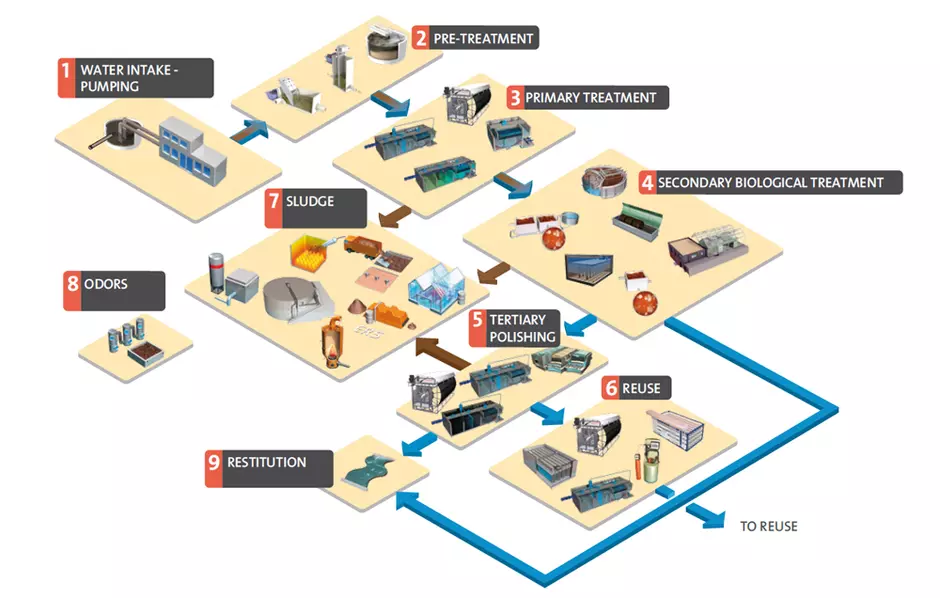
Wastewater Treatment Solution For Entire Cycle
We provide all the sanitation equipment needed for the day-to-day operation of safe and environmentally compliant industrial treatment plants of capacities. We offer tailor-made, efficient and cost-effective solutions covering the entire cycle of wastewater treatment:
1. Primary treatment:
This initial stage focuses on removing suspended solids (SS) from wastewater. By using flocculation, coagulation, settling, and flotation processes, combined with the injection of chemical reagents as needed, 70% to 90% of these solids are separated from the water.
2. Secondary treatment:
Advanced biological treatment methods are employed to eliminate dissolved pollutants, such as carbon, nitrogen, and phosphorus. These processes rely on specific bacteria to break down contaminants and may be combined with chemical reagents when stringent purification is required.
3 . Tertiary treatment and reuse:
This final stage targets any remaining dissolved solids in the water. It includes disinfection to make the treated water suitable for reuse in various applications, ensuring a high standard of water purity.
4. Sludge treatment:
The solids and pollutants removed during wastewater treatment become sludge. Veolia Water Technologies specialises in recycling and repurposing this sludge, providing valuable resources for sectors like agriculture, energy, and construction through advanced technological solutions.
Odour Management
To eliminate unpleasant odours during wastewater treatment, Veolia employs continuous air extraction and treatment systems to reduce odour pollution and comply with air quality regulations. The extracted air undergoes thorough treatment processes before being safely released into the environment.
How Our Wastewater Treatment Technologies Support Your Sustainability Goals?
On a daily basis, Veolia Water Technologies brings innovative wastewater treatment technologies to Australian businesses committed to efficient, sustainable water treatment. As a trusted wastewater treatment company, Veolia’s vast expertise and patented technologies provide peace of mind for industries adhering to strict health and environmental standards
Veolia Wastewater Treatment Technologies Include:
Actiflo: a clarifier that efficiently handles high-speed sedimentation.
- Actiflo Carb: combines clarifying and activated carbon processes to remove micropollutants.
- Biostyr: a modular bio-filtration system to control water pollution.
- MBBR technology by AnoxKaldnies: designed for effective sludge recovery.
- Aquilair: for advanced odour reduction, capable of eliminating over 99% of odours.
The Chemical Conditioning Of Water
Chemicals play a pivotal role in optimising wastewater treatment systems. Veolia’s HYDREX water treatment chemical line offers solutions that improve the performance and safety of water treatment facilities, helping clients reduce both maintenance and operating costs.
Wastewater Treatment FAQs
The cost of wastewater treatment varies based on factors such as the volume and characteristics of the wastewater, the required treatment level, and the technologies employed. While initial capital investments can be significant, modern treatment solutions, like those offered by Veolia, are designed to be energy-efficient and cost-effective over time. Implementing advanced technologies can lead to operational savings and compliance with environmental regulations.
Yes, there are several eco-friendly wastewater treatment options. Veolia provides sustainable solutions that minimise environmental impact, such as biological treatment processes, energy-efficient systems, and resource recovery technologies. These methods reduce energy consumption, lower greenhouse gas emissions, and enable the recycling of water and nutrients, contributing to environmental sustainability.
Industrial wastewater can contain pollutants like heavy metals, organic compounds, and nutrients that, if untreated, may harm aquatic ecosystems, contaminate drinking water sources, and disrupt biodiversity. Proper treatment is essential to mitigate these environmental impacts and protect public health.
Effective maintenance of wastewater treatment plants involves regular monitoring of system performance, timely equipment inspections, staff training, and adherence to operational protocols. Implementing predictive maintenance strategies and utilising advanced control systems can enhance efficiency and prevent unexpected downtimes.
Common contaminants in wastewater include organic matter, suspended solids, nutrients (nitrogen and phosphorus), pathogens, heavy metals, and chemical pollutants. The specific composition depends on the source of the wastewater, such as domestic, industrial, or agricultural activities.
Inadequate wastewater treatment can lead to environmental pollution, public health hazards, legal penalties, and damage to a company's reputation. It may result in the contamination of water bodies, harm to aquatic life, and the spread of waterborne diseases.
More Services From Veolia Water Treatment